
Quick Summary
Key Takeaways
In modern oftware development, the Quality Assurance (QA) function is evolving. Traditional QA, where testing is owned by a separate team, is no longer scalable, especially in fast-moving, data-driven organizations.
Thus the Quality Assistance model: a forward-thinking approach that shifts quality ownership to the entire team, while enabling QA professionals to act as coaches, enablers, and strategists rather than testers.
This model has gained popularity in software engineering, but how does it translate to data engineering? For this, let’s understand first:
What is the Quality Assistance Model?
In a nutshell, Quality Assistance means everyone is responsible for quality.
Instead of a siloed QA team that tests everything after it's built, Quality Assistance emphasizes building quality from the start. QA specialists become advisors who help engineers, analysts, and data scientists adopt the tools, mindset, and practices needed to deliver high-quality data products.
Traditional QA vs Quality Assistance:
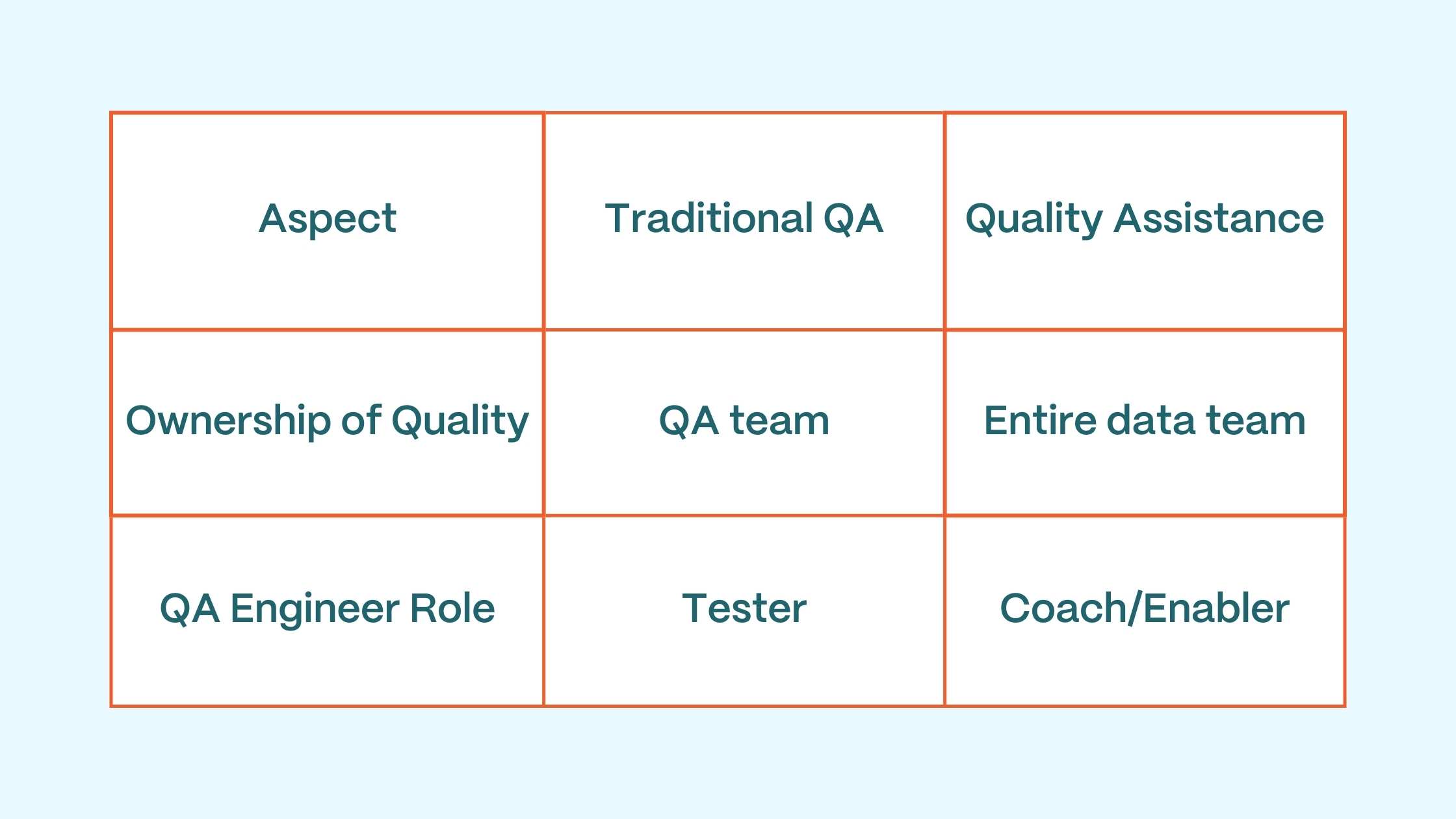
Why Traditional QA Fails in Data Engineering? Data engineering brings unique challenges:
- Complex pipelines with many moving parts (ETL/ELT, streaming, APIs)
- Dependencies on external data sources
- Schema drift and data inconsistency
- Late detection of issues (e.g., incorrect aggregates, missing values)
In traditional QA, these issues are often identified after the data is loaded into a warehouse, sometimes days or weeks too late, which is a significant problem.
Why Quality Assistance Works Better for Data Teams?
The Quality Assistance model addresses these pain points by:
- Empowering data engineers and analysts to test early and often
- Shifting from reactive testing to proactive design and validation
- Encouraging automation and tooling as a first-class citizen
- Promoting collaboration between QA, engineers, and business stakeholders
Implementing Quality Assurance in Data Engineering:
Here’s how we can embed the QA model into data engineering workflows.
1. Promote Testable Data Pipelines just like software code.
2. Shift Testing Left in the ETL Process, i.e. catch issues before they hit the data warehouse.
3. Coach, instead of owning, which means if you're a QA or data quality specialist:
- Don’t write every test yourself
- Teach engineers and analysts how to write meaningful data tests
Benefits of Quality Assistance in Data Engineering:
- Faster feedback loops
- Increased trust in data across the organization
- Shared responsibility implies more test coverage
- QA becomes a strategic partner, not a bottleneck
- Empowered engineers means happier teams
At last, we can say that the Quality Assistance model is a game-changer for data engineering teams. By enabling rather than owning quality, teams move faster, reduce errors, and ship more reliable data products.
As data pipelines grow in complexity, the only scalable path forward is to make quality everyone’s job with quality engineers leading the charge as coaches and catalysts.